
Delving into the world of mid century modern architecture, we uncover a style that revolutionized the way we think about design. From its origins to its iconic buildings, this architectural movement has left a lasting impact on the world.
History of Mid-Century Modern Architecture
Mid-century modern architecture emerged in the mid-20th century, roughly spanning from the 1930s to the 1960s. This architectural style was a response to the traditional and ornate designs that dominated the early 20th century.
Origins and Characteristics
Mid-century modern architecture is characterized by clean lines, minimal ornamentation, and a seamless flow between indoor and outdoor spaces. This style emphasizes functionality and simplicity, with an emphasis on open floor plans and large windows to bring in natural light.
Influential Architects and Designers
1. Frank Lloyd Wright
A pioneer of organic architecture, Wright's designs inspired many mid-century modern architects with his focus on blending buildings with their natural surroundings.
2. Richard Neutra
Known for his sleek and minimalist designs, Neutra's work exemplifies the principles of mid-century modern architecture.
3. Charles and Ray Eames
Renowned for their contributions to furniture design, the Eameses also designed iconic mid-century modern homes that are still influential today.
Elements of Mid-Century Modern Architecture
Mid-century modern architecture is characterized by a unique set of elements that set it apart from other architectural styles. These elements include the materials used, signature features like open floor plans and large windows, and specific interior design principles.
Common Materials Used
In mid-century modern architecture, common materials used include:
- Wood: Often in the form of exposed beams, paneling, or furniture, bringing a warm and natural element to the design.
- Concrete: Used for flooring, walls, and even countertops, providing a sleek and modern look.
- Glass: Large windows and sliding glass doors are key features, allowing for natural light to flood the interior spaces.
- Steel: Utilized in structural elements and sometimes as a design feature, adding a touch of industrial aesthetic.
Signature Features
Some of the signature features of mid-century modern architecture include:
- Open Floor Plans: Spaces are interconnected without many walls, creating a sense of flow and spaciousness.
- Large Windows: Floor-to-ceiling windows and glass walls blur the line between indoors and outdoors, emphasizing the connection to nature.
- Clean Lines: Straight, simple lines define the architecture, often with minimal ornamentation.
- Integration with Nature: Emphasis on bringing the outdoors in, with courtyards, patios, and landscaping playing a significant role in the design.
Interior Design Principles
The interior design principles of mid-century modern architecture differ from other styles in several ways:
- Minimalism: Furniture and decor are often sleek, simple, and functional, with a focus on clean lines and uncluttered spaces.
- Functionality: Form follows function, with an emphasis on practicality and usability in the design of furniture and layouts.
- Use of Organic Shapes: Curved and organic shapes are incorporated in furniture and decor to soften the overall angular aesthetic.
- Mix of Materials: Combining different textures and materials like wood, metal, and glass to create visual interest and depth in the space.
Iconic Mid-Century Modern Buildings
Mid-century modern architecture produced several iconic buildings that have left a lasting impact on the architectural world
Farnsworth House
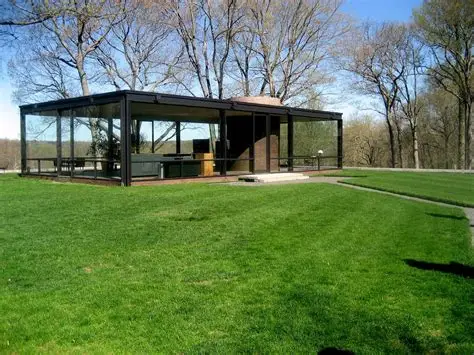
The Farnsworth House, designed by architect Mies van der Rohe in 1951, is a prime example of mid-century modern architecture. Located in Plano, Illinois, this iconic glass house is celebrated for its minimalistic design and seamless integration with nature. The use of steel and glass in a simple, open floor plan exemplifies the principles of the movement.
Stahl House
Another notable mid-century modern building is the Stahl House, also known as Case Study House #22, designed by Pierre Koenig in 1960. Situated in the Hollywood Hills of Los Angeles, this house features floor-to-ceiling glass walls that provide panoramic views of the city.
The innovative use of steel framing allowed for a cantilevered design that became a hallmark of the era.
Seagram Building
The Seagram Building in New York City, designed by Mies van der Rohe and Philip Johnson in 1958, is a significant example of mid-century modern skyscraper architecture. This bronze-colored steel and glass tower introduced the International Style to American architecture, emphasizing simplicity and functionality.
The building's clean lines and minimalist aesthetic set a new standard for urban architecture.
TWA Flight Center
Designed by Eero Saarinen and opened in 1962, the TWA Flight Center at JFK Airport in New York is a striking representation of mid-century modern architecture. The building's futuristic design, characterized by its swooping curves and expansive windows, reflects the optimism and innovation of the era.
The innovative use of concrete shells and glass created a sense of fluidity and movement within the terminal.
Influence of Mid-Century Modern Architecture
Mid-century modern architecture has had a profound influence on contemporary design, shaping the way we approach buildings and interiors today. This architectural style, known for its clean lines, open spaces, and integration with nature, continues to inspire architects and designers around the world.
Sustainability in Mid-Century Modern Architecture
Mid-century modern architecture was ahead of its time in terms of sustainability. The focus on natural light, passive heating and cooling techniques, and the use of organic materials made these buildings inherently energy-efficient. This emphasis on sustainability has resonated with contemporary design practices, leading to a renewed interest in eco-friendly architecture.
Global Impact of Mid-Century Modern Architecture
The influence of mid-century modern architecture extends far beyond its original roots in the United States. This architectural style has left its mark on various cultures and regions around the world, influencing the design of buildings in Europe, Asia, and beyond.
The timeless appeal of mid-century modern design continues to be celebrated and adapted to suit different contexts, showcasing its global impact on the architectural landscape.
End of Discussion
In conclusion, mid-century modern architecture stands as a timeless testament to innovation and creativity. Its influence continues to shape contemporary design and inspire architects and designers around the globe.
User Queries
What are the key characteristics of mid-century modern architecture?
Key characteristics include clean lines, open floor plans, and a seamless integration with nature.
Who are some influential architects associated with mid-century modern architecture?
Architects like Frank Lloyd Wright, Charles and Ray Eames, and Eero Saarinen are notable figures in this architectural style.
How has mid-century modern architecture influenced contemporary design?
Its emphasis on simplicity, functionality, and connection to the outdoors has greatly influenced modern design trends.